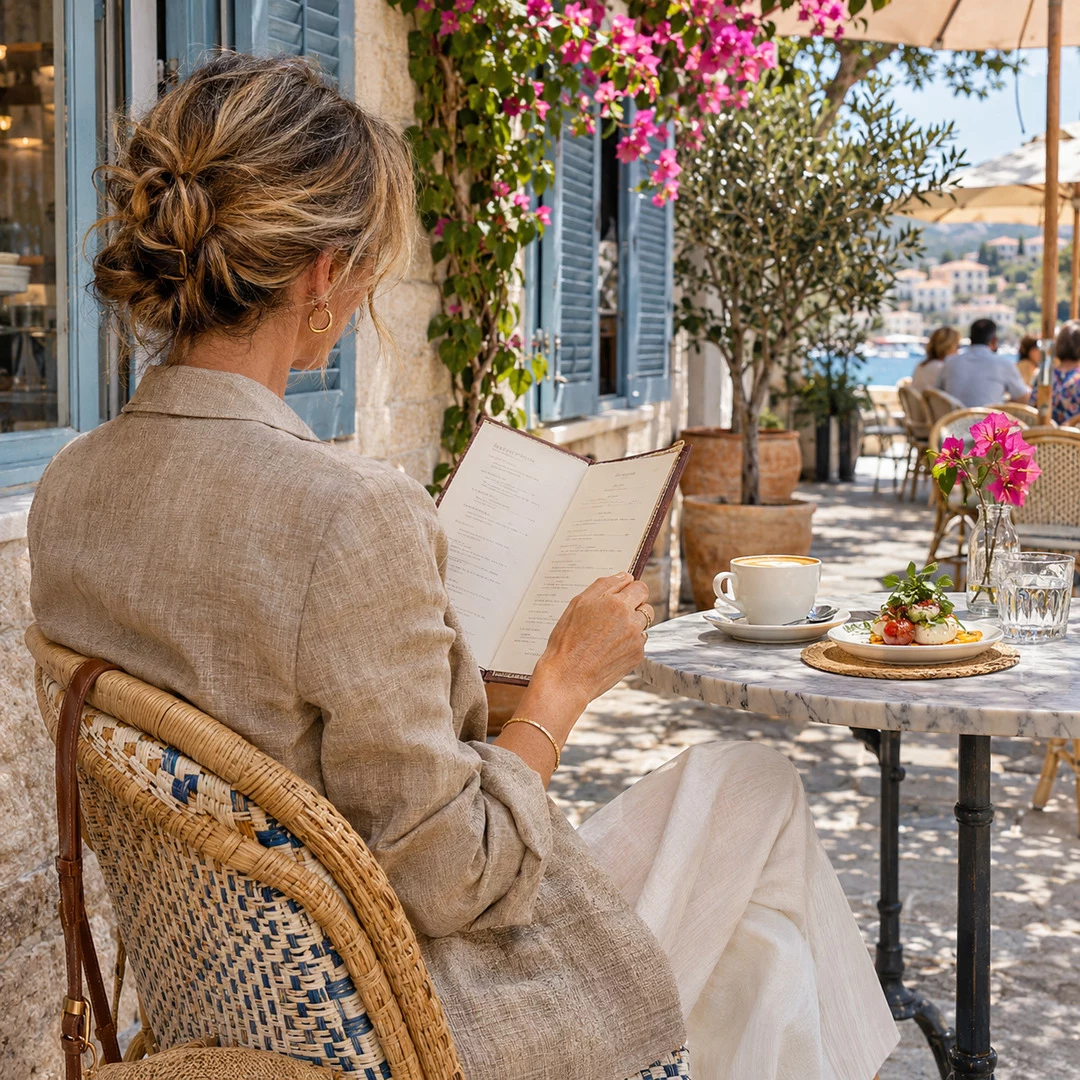
There is a small, surprisingly revealing moment when you say, “Table for one.” Nothing dramatic happens. No one drops a tray. The waiter does not summon the emergency services. And yet many of us have said those words as if we were being asked to account for our entire lives.
For years, we learned to pair the nicest plans with company: lunch, a film, a trip, an afternoon in a bookshop. If nobody was free, we postponed them. As though our own presence were merely the waiting room and real life would begin when someone else arrived.
Enjoying time alone is not a rejection of other people. It is a decision to stop putting your curiosity on hold.
It is not loneliness; it is choosing not to postpone yourself
Loneliness hurts when it is unwanted or when we feel there is nobody to turn to. A solo outing can be something quite different: a deliberate choice to see that exhibition, linger over coffee or explore an unfamiliar street. Both feelings can exist at once. You can wish someone were with you and still give yourself a lovely afternoon.
The shift is in the inner script. Not “Nobody can come, so I suppose I’ll go alone,” but “I want to go, and today I’m taking myself.” It sounds almost too simple, but it changes your role from understudy to leading woman.
Feeling awkward at first does not mean you have failed
At the beginning, you may feel conspicuously visible. You check your phone with theatrical enthusiasm, straighten the napkin three times and become convinced the couple nearby are discussing your relationship status. In all likelihood, they are deciding whether to order pudding.
Discomfort is not proof that the idea was wrong. It usually means you are doing something that has not yet become familiar. Start kindly: breakfast somewhere welcoming, an afternoon film, a small museum or lunch in a place you already know. Your first solo plan does not need to be a fortnight on a remote island.
Choose a plan with pleasure in it, not just bravery
Going out alone works best when the aim is not to perform independence but to enjoy something specific. Pick a restaurant for the dish you actually fancy, browse a bookshop without rushing, take a novel to a café, visit a market and cook something new afterwards.
It also helps to leave some of the space unfilled by a screen. A phone can be useful company, but it need not become armour. Looking around, noticing the room, tasting the food or jotting down an idea gives the outing texture. Being alone is not the same as being absent.
The quiet luxury of not negotiating every detail
Shared plans are joyful, but they come with their own administration: timing, tastes, budgets and the inevitable “I’m not sure about that place.” A solo outing lets you rediscover what you choose when nobody is watching. Perhaps you like walking slowly, ordering two starters instead of a main course, or spending an hour with one painting.
That knowledge does not make you selfish. It makes you clearer. It can even improve time spent with others, because you stop expecting someone else to guess everything you want.
How to begin without turning it into a test
- Choose something you already enjoy. Going alone is the new element; everything else can be familiar.
- Give it a simple beginning and end. A forty-minute coffee counts just as much as a day trip.
- Bring a small companion. A book, notebook or saved walking route offers structure without hiding you away.
- Do not grade every minute. One awkward moment does not cancel a good afternoon.
- Try more than once. Ease often arrives on the second or third outing, not the instant you walk through the door.
Still wanting company, without living by everyone else’s diary
Learning to make solo plans does not require becoming a heroic self-sufficient woman who never needs anyone. Wanting affection, conversation and companionship is entirely human. The freedom lies in not making every wish depend on three calendars aligning, a partner being in the mood or grown children being available.
Sometimes a table for one becomes a wonderfully peaceful table. Sometimes there is an unexpected conversation. Sometimes you simply eat well, pay the bill and go home feeling that the afternoon mattered. That is already plenty.
After 40, one of the quietest freedoms may be this: no longer waiting for permission, the perfect occasion or a companion before doing something you want. Not because being alone is always better, but because your own company counts too.
Lucía