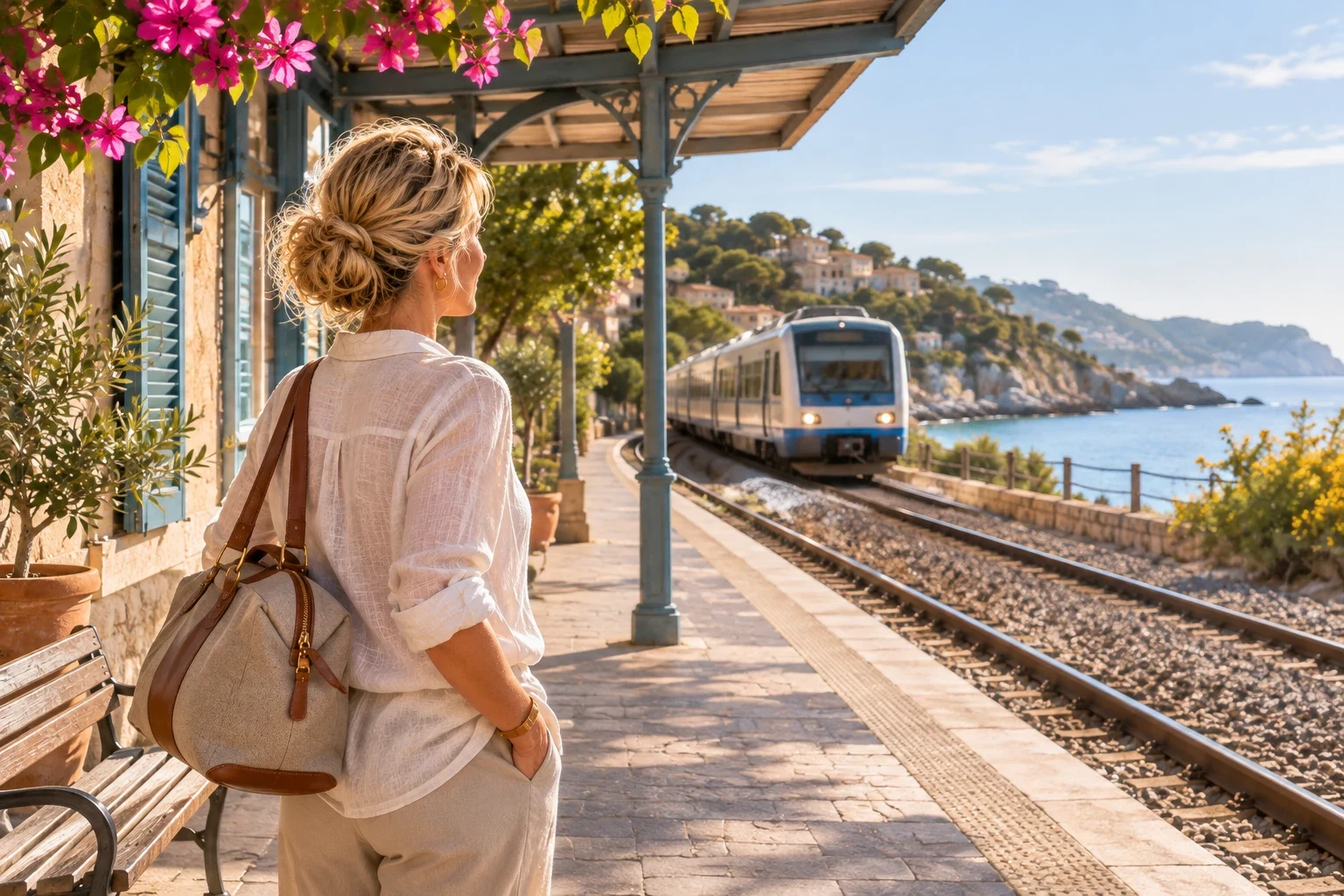
Travelling alone for the first time after 50 can sound wonderfully simple until the questions begin. What if eating alone feels awkward? What if you get lost? What if, after longing for space of your own, you discover you do not quite know what to do with it?
A solo getaway does not need to become an achievement or a public declaration of independence. It can be much more ordinary: one night away, a nearby town, an easy train, and a few hours in which nobody asks what the next plan should be.
You do not have to prove you are brave
There is a peculiar pressure around solo travel. You are expected to return transformed, confident and delighted by every minute. Real freedom has room for nerves, an awkward moment, and even a call home because you want to hear a familiar voice.
The point is not to prove that you need nobody. It is to notice what happens when, for a short while, you can choose without negotiating: where to have breakfast, how far to walk, whether to visit a gallery or spend half an hour watching the world go by.
Begin with a trip that is easy to change
Your first getaway does not need a long flight or a booking that feels like a major commitment. One or two nights, within a comfortable distance and with a straightforward route, let you try the experience without feeling obliged to enjoy it at any cost.
A direct train, central accommodation and a daylight arrival remove small sources of stress. That is not a lack of adventure; it is a kind first design. When logistics stop filling your head, you have room to discover whether solo travel suits you and what version of it you enjoy.
Choose a place that makes things simple
For a first attempt, it helps to choose somewhere you can enjoy without complicated timetables: streets to wander, a café terrace, a market, a bookshop or the sea. You want choices nearby, not an exhausting list of attractions you feel required to complete.
You do not need the destination that sounds most impressive. A town you already know slightly, a coastal place out of season, or somewhere you have said “one day” about for years may be better. Partial familiarity does not diminish the experience; it can provide exactly enough confidence to begin.
Take a framework, not a military schedule
Booking your room, knowing how to arrive and choosing one activity for the first day gives the trip some shape. Filling every hour turns freedom into another form of performance. Leave deliberate gaps in which you are allowed to change your mind.
One useful approach is a main plan with two easy alternatives. If it rains, you are tired, or a place does not appeal, you have not failed. You have used one of the pleasures of travelling alone: changing direction without calling a meeting.
Eating alone becomes normal one table at a time
The first lunch may feel stranger than the journey. Everyone else seems to be accompanied, and you may imagine the server is waiting for another person to arrive. That sensation usually lasts for far less time than we expect.
Start with breakfast, a counter seat, a terrace or somewhere informal. A book can help, although it is also worth looking up. Eating alone is not occupying an incomplete table; it is sitting down without having to keep a conversation going unless you want one.
Be sensible without turning the trip into a thriller
Share your accommodation and rough itinerary with someone you trust, keep your phone charged, save a copy of important documents and avoid a confusing late-night arrival. If a situation feels wrong, moving away without worrying about seeming dramatic is sensible too.
But looking after yourself does not mean spending the trip rehearsing dangers. Preparing the basics is what allows you to stop thinking about them constantly. Prudence should travel like a good pair of shoes: present and useful, without choosing every step.
Loneliness may appear, and it proves nothing
There can be beautiful solo moments and others when a laughing couple at the next table causes an unexpected ache. That does not mean the getaway was a mistake. Being alone and feeling lonely are different, but sometimes their paths cross.
Send a photograph, call a friend, or return to your room early. You can also let the feeling pass without fixing it immediately. Freedom does not mean enjoying every minute on command; it means deciding how to care for yourself when your mood changes.
Come home with information, not a verdict
You may return eager to go again. You may learn that you prefer travelling with friends but want one morning to yourself. Perhaps solo trips only appeal in familiar places. There is no correct conclusion.
A first getaway lets you meet yourself in motion. You do not have to adopt “solo traveller” as a new identity. It is enough to know that you can pack a bag, board a train and keep yourself company for a while. Even if you use that possibility rarely, it makes life larger.
— Lucía